Posts

The Good Shepherd

Image
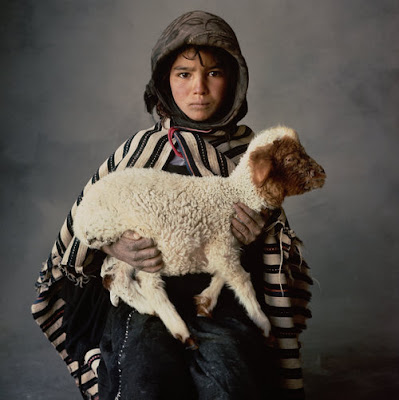
The 23rd Psalm is the ambient music surrounding this morning’s Gospel. Words we know so well: The Lord is my shepherd; there is nothing I shall want. Fresh and green are the pastures where he gives me repose; near restful waters, he leads me to revive my drooping spirit. Even though I walk through the valley of the shadow of death, I fear no evil, for he is with me… This cherished image, perhaps banalized by overexposure in song and art, nonetheless shines out as an enduring description of who God is. The ineffable One whose name could not be spoken by the people of Israel, would be fittingly, repeatedly described as Shepherd. Jesus appropriates this imagery for himself, boldly, lovingly, “signaling his consciousness of his Messianic role.” This is the Father’s will for him. And so Jesus tells us, “I am the good shepherd. A good shepherd lays down his life for the sheep.” Because he understands his vocation as beloved Son, he senses that this reality is coming true in him. Isr...

Always With Us

Image
In the poignant story of the disciples of Emmaus we see the Church’s Easter faith grow through the way in which Jesus speaks of himself. Faith is not given to us once and for all, as if it were a wrapped gift that we only have to open and then enjoy. Faith is a  living  reality, and therefore something  organic  in us that either grows or dies. In this Emmaus story we see very clearly how—in the initial relationship of these two disciples with Jesus— faith and doubt, joy and sadness, enthusiasm and discouragement, coexist side by side.  Here is the true existential situation of the Christian believer in this world.  How wonderful that God understands our shakiness so well! Just because we declare ourselves Christians, and perhaps half-consciously boast of possessing an unshakable faith, we cannot (without becoming hypocrites) deny the dark and uncertain aspects of our hearts. In this present time of our earthly life we Christians, too, are tossed about li...

A Supper at Emmaus

Image
This morning’s Gospel begins dark and somber, a story of dashed hopes and disorientation. Two disciples walk along despondently. We thought he was the One; but look what happened. Everything fell apart. They leave Jerusalem, the holy city, the scene of tragic crucifixion. What they do not yet understand is that it has become the scene of God’s greatest triumph.   Then Jesus himself shows up, just another Stranger on his way out of Jerusalem. But they’re so stuck in their confusion that they cannot recognize him. Jesus listens, interested in what’s weighing on their hearts. Why are you so sad? What are you two discussing? What are we discussing? Cleopas asks in exasperation. Are you the only one who doesn’t know what happened? Gee, no. What? says Jesus. (Probably one of the more comical moments in all of Scripture.) He the risen Lord riddled with the holes of his passion, plays dumb. He knows the story alright; it’s written all over his body, even into the depths of his pierced he...

Maria Gabriella

Image
  Blessed Maria Gabriella, a Trappistine of the monastery of Grottaferrata in Italy, died on this day in 1939 at the age of twenty-five, less than two years after her simple profession, having given her life for Christian unity. While not all of us are called to give our lives as Maria Gabriella did, we are all called, by the logic of our vows and of the Christian life in general, to the same totality of self-gift in love, to the same sensitivity, availability, and responsiveness to the promptings of the Holy Spirit. In union with Maria Gabriella let us pray for the unity of Christians. And through her intercession may we too have some share in her interior freedom, courage, and generosity. Meditation by Father Timothy.

Simple Profession of Brother Guerric

Image
“If today you hear his voice, harden not your hearts.” Br. Guerric, it may seem a little odd to preface this solemn moment of your vows with this holy warning, but it may be one of the most important words from “a father who loves you,” namely, St. Benedict. Hardness of heart is the main obstacle to receiving God’s mercy, which you have just requested. It refuses to admit that it is wrong or needs God. So, if mercy is your goal, you have come to the right place, for the Cistercian life is precisely a remedy for hardness of heart. But how does Cistercian life soften up the hardness of our hearts? In short, our Fathers designed it to demolish self-will. Who doesn’t want to sleep in whenever he wants? Who doesn’t want the freedom to ignore church bells? Who doesn’t want to be his own man rather than live under a rule and an abbot? In other words, who doesn’t want to do it his own way? But in the Cistercian life, Jesus shows us the great good of doing it the Father’s way. That means conver...

Anointing the Sick During Easter Week

Image
          Earlier this week we heard St. Peter say: “I have neither silver nor gold, but what I do have I give you: in the name of Jesus Christ the Nazorean, rise and walk.” In a way, this is what we are asking in this anointing of our sick and elderly brothers. It is a special kind of service, like the washing of one another’s feet at the Mandatum. We are bringing our faith, hope, and love to embrace our brothers, praying for their welfare; and our brothers are bringing their faith, hope, and love to us by becoming a sign of the Lord’s suffering among us.           St. James urges those who are sick to summon the priests to pray over them and anoint them in the name of the Lord. The priests make this prayer in faith, trusting that the Lord still wants to heal as he did in his lifetime. However, all of us must hold fast to our faith that the Lord’s word never returns void, but achieves the end for which he sent i...

Death As Gateway

Image
  Jesus’ death is torture for me! I prefer his life to his death.... While he was alive, he brought only three dead persons back to life. Now, thanks to his death, all the dead come back to life, and trample me as they rush out through the gates of hell. The 4th- century monk-poet St Ephrem the Syrian puts these words of grievance into the mouth of Death personified. Death is finally aggrieved! Alleluia! These inspired words express well the fear that troubles priests and Pharisees the day after Good Friday: “This last imposture would be worse than the first”, they say. At the very moment they believe they have finally gotten rid of Jesus, the authorities too sense how much more dangerous he might be dead than alive. Without realizing it, these staunch defenders of tradition are the first to experience the disruptive novelty imposed on Death by this dead man. Death is now robbed of the ability to silence its victims by plunging them into the “land of forgetfulness” (Ps 88:13). Alle...